What Size RV Should a First-Timer Rent?
Updated for 2026. Pick the right RV size for your first rental with real length limits, towing notes, a tow-vehicle table, and a beginner fit guide.
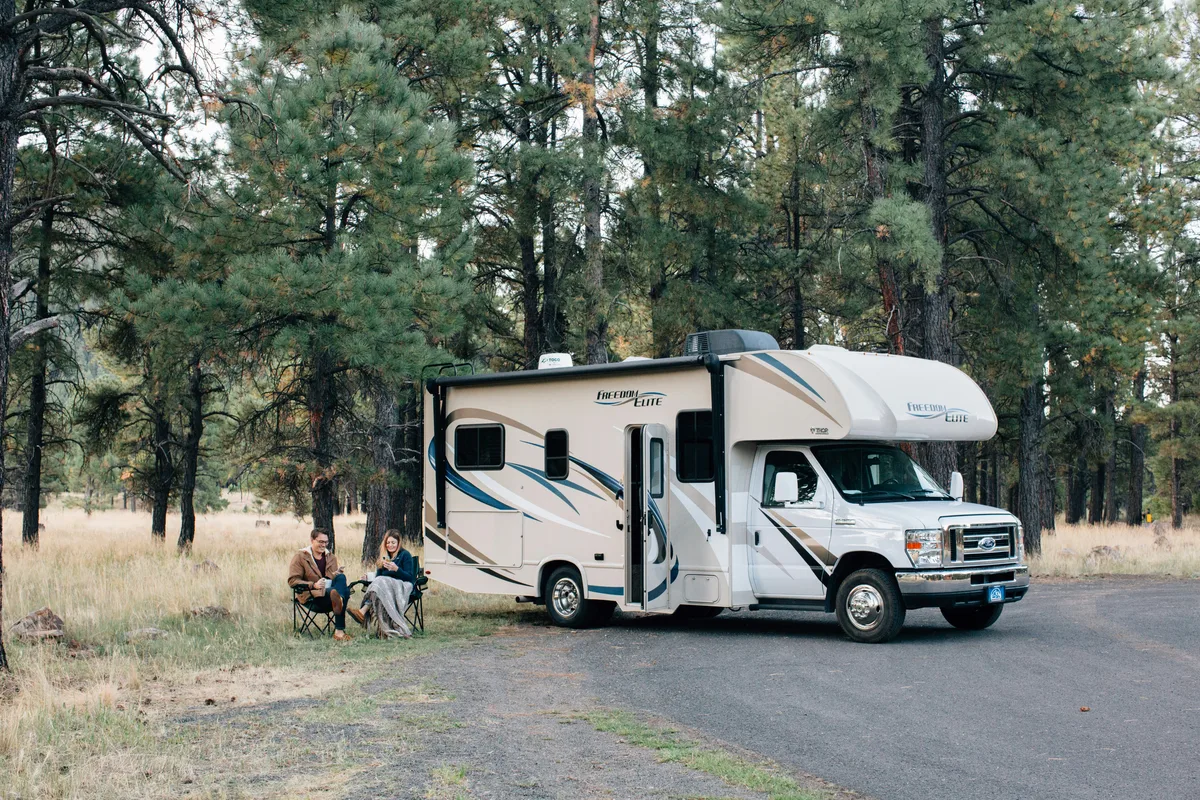
Photo by Patrick Tomasso on Unsplash
The right RV size for a first rental is smaller than most people expect. A 35-footer looks impressive in photos, but at a tight forest campground or a gas station in a mountain town, length becomes a liability. For most first-timers, a rig between 19 and 28 feet is the sweet spot — enough room to sleep a family, small enough to drive, park, and fit campsites without stress.

Photo by Patrick Tomasso on Unsplash
Why Shorter Is Easier at First
- Campgrounds have length limits. Many national park and older state-park sites cap rigs at 27–40 feet. A 33-foot Class C may not fit.
- Driving is simpler. Shorter rigs turn, back, and park in normal spaces; long ones need pull-throughs and planning.
- Fuel and fees. Smaller rigs burn less and often cost less per night.
- Less to manage. Fewer slide-outs and systems means fewer things to learn.
Size by Group
| Group | Comfortable size | Example |
|---|---|---|
| Solo / couple | 17–23 ft | Class B van |
| Family of 3–4 | 21–28 ft | Small Class C, hybrid |
| Family of 5–6 | 26–32 ft | Class C |
| 6+ or long stays | 30–40 ft | Class A, large fifth wheel |
Towing Note (Trailers)
If you rent a trailer, size is set by what your tow vehicle can handle — not just what sleeps everyone. The numbers that matter:
| Tow vehicle type | Typical safe trailer range |
|---|---|
| Large SUV / small truck (5,000–7,500 lb rating) | Pop-up, small hybrid, light travel trailer |
| Half-ton truck (8,000–10,000 lb rating) | Mid travel trailer, hybrid |
| 3/4–1-ton truck | Large travel trailer, fifth wheel, toy hauler |
Check the trailer’s GVWR against your vehicle’s tow rating and the cargo you add; the math is in RV weight basics. A trailer too heavy for the tow vehicle is unsafe regardless of how many it sleeps.
Measure Your Real Length
Always measure total length including the hitch, bike rack, and bumpers. A “30-foot” Class C is often 32–33 feet on paper, and that difference is what gets you turned away at a 30-foot site. Match the rig’s real length to the site’s max length when you book campsites.
Beginner Recommendation
Rent the smallest rig that sleeps your group with seat belts for everyone. A 25-foot Class C is the most common first rental for a family; a 20-foot van for two. Size up only after you have a trip or two under your belt.
For the cost, use the RV Rental Fee Calculator.
FAQ
Q: What RV size is best for a first-timer? A: For most first-timers, 19–28 feet is the sweet spot. It sleeps a family yet still fits campgrounds, parks in normal spaces, and burns less fuel than a large rig.
Q: Will a 30-foot RV fit in national park campgrounds? A: Often not. Many national park and older state-park sites cap rigs at 27–40 feet, and tight forest loops block longer units. Match the rig’s real length to the site’s posted max.
Q: Do I need a special license for a large RV? A: Most consumer rentals in the U.S. are under 26,000 pounds and drivable with a standard license. A few extra-large Class A diesels may require a non-commercial license or endorsement depending on the state.
Q: Is a van too small for two people? A: For a couple or solo traveler, a Class B van is usually ideal — easiest to drive, best fuel economy, and it fits nearly any site. It gets tight with more than two people.
Q: Should I rent a trailer or a motorhome first? A: A motorhome is simpler for a first trip because you drive one vehicle and do not manage a separate tow setup. Rent a trailer only if you already have a vehicle rated to tow it.